What is pressure washing?
Pressure washing uses a powerful stream of water to blast dirt, moss and weeds off hard surfaces. Done well, it uses a rotary surface cleaner rather than a narrow lance, so the clean is even and doesn’t leave stripes or wash sand out of the joints.
What is soft washing?
Soft washing uses low pressure, about the same as a garden hose, together with a cleaning solution that kills algae, lichen and mould. The solution does the work, then it’s rinsed off gently. Because the growth is killed at the root, the surface stays clean for longer.
Which surfaces need pressure washing?
- Block paving driveways and paths
- Concrete and tarmac driveways
- Most patio slabs, at a pressure that suits the stone
- Hard garden steps and walls in good condition
Which surfaces need soft washing?
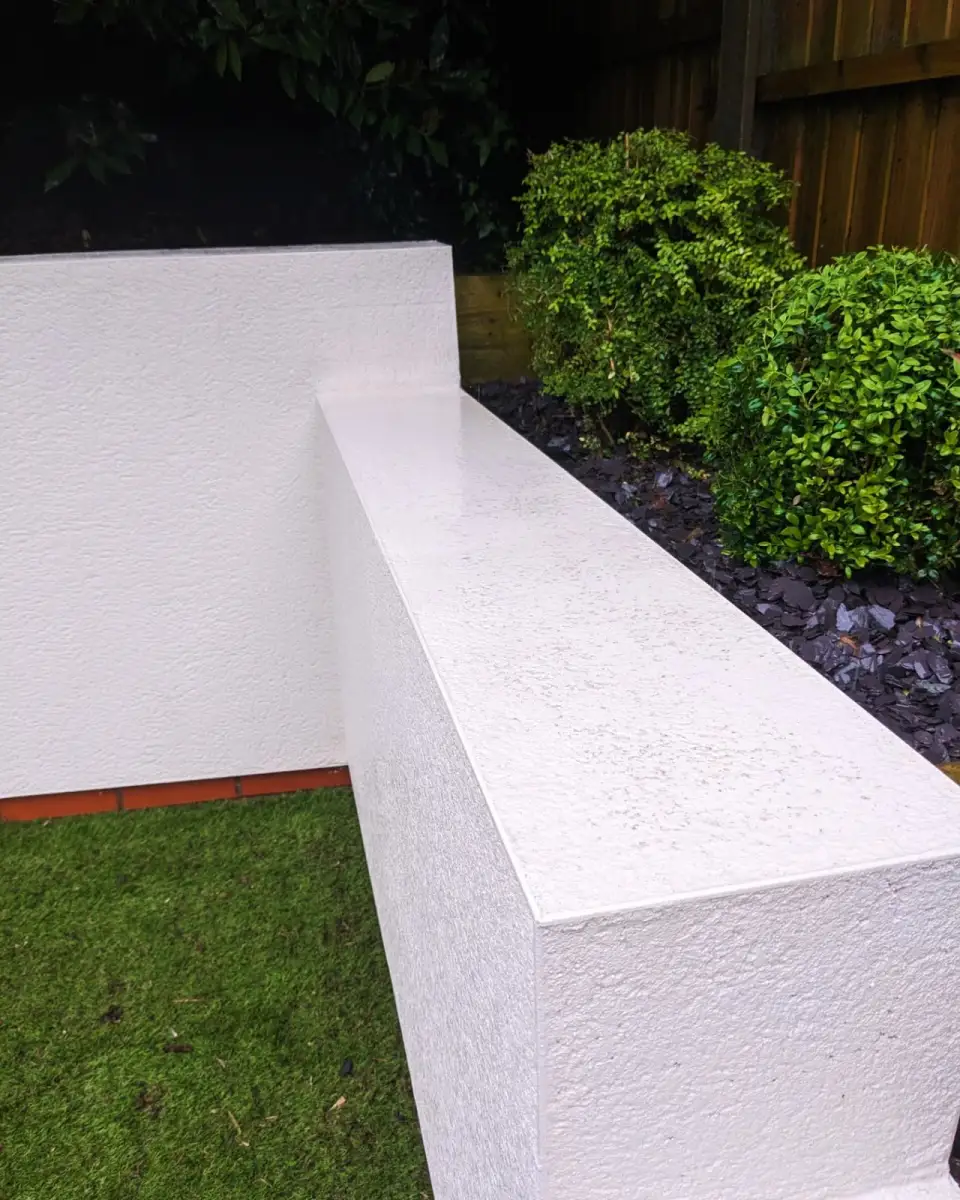
- Render, pebbledash and painted walls
- Roof tiles, after moss has been removed by hand
- Timber cladding and fences
- Soft natural stone such as some sandstones
- Anything painted, where high pressure would strip the paint
What happens if the wrong method is used?
High pressure on render can cut into the surface, open cracks and force water behind it. On a roof it can strip tiles and push water underneath. On soft stone it can etch the surface. In the other direction, soft washing alone won’t shift the packed-in dirt and weeds on a block paving driveway.
Many homes need both: a pressure wash for the driveway and patio, and a soft wash for the walls and roof. A good contractor will tell you which part needs which.
Is soft washing safe for plants and pets?
The solution is rinsed off and plants nearby are protected or wetted down first. It’s sensible to keep pets indoors while the work is being done and until surfaces have been rinsed.
Want a professional to take a look? Send us a photo on WhatsApp and we’ll reply with a free, fixed quote — usually within 2 hours.